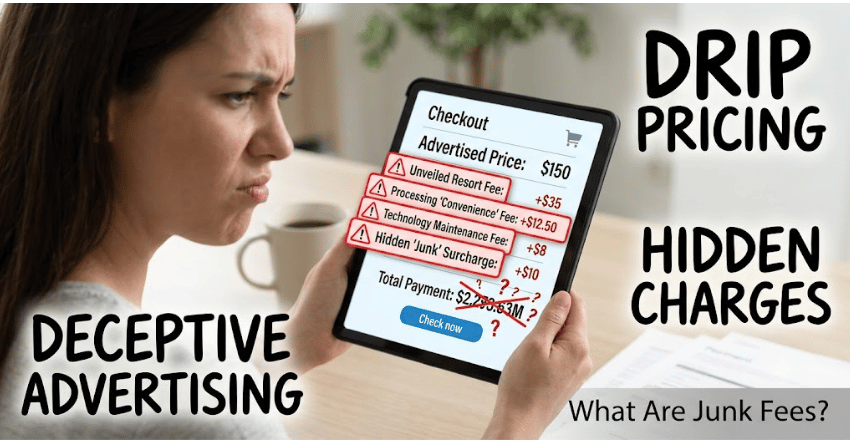
Junk fees are mandatory or misleading charges that raise the final price above the amount first advertised. They often appear during checkout, on a monthly statement, or after you’ve invested time in a purchase. Learning where these charges hide can help you compare real prices and challenge unfair billing.
| Key point | What it means |
| Common examples | Resort, ticketing, service, processing, convenience, and rental fees |
| Main warning sign | The total rises late in the checkout process |
| Federal protection | An FTC rule covers live-event tickets and short-term lodging |
| Best defense | Compare the full payable price, not the headline price |
| After an unfair charge | Save evidence, contact the business, and dispute it when justified |
Direct answer: Junk fees are added charges that aren’t clearly reflected in the price you first see. Common examples include hotel resort fees, ticket service charges, rental application costs, and avoidable account fees. You can reduce them by requesting an all-in price, reviewing checkout screens, and checking statements regularly.
What Are Junk Fees?
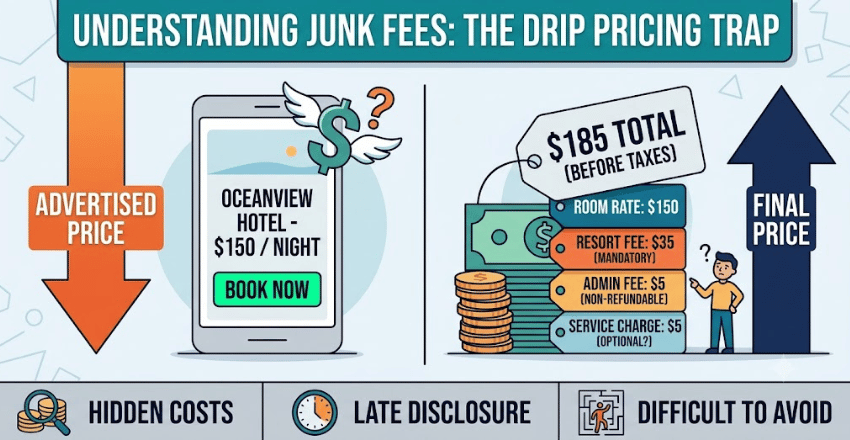
The term generally describes charges that are hidden, disclosed late, poorly explained, or difficult to avoid. A company may advertise a low starting price and add mandatory costs after you begin the transaction. This practice is often called drip pricing. The customer initially sees one amount, then additional charges appear during later checkout stages.
For example, two hotels may each advertise a room for $150. One adds a mandatory $35 resort charge before payment. The other has no required add-on. Comparing only the advertised room rates would hide the real $35 difference. This makes the first hotel’s actual nightly cost $185 before taxes, even though both initially appeared to cost the same.
A fee isn’t automatically unfair because it appears as a separate line item. Optional upgrades, government taxes, and reasonable shipping charges may be legitimate. The concern is whether a required charge was clearly included or disclosed when the price was presented.
Nine Common Hidden Charges
1. Hotel resort and destination charges
Hotels sometimes add mandatory charges for Wi-Fi, gym access, pools, local calls, or other amenities. You may owe the charge even when you don’t use those services. These fees are often listed as resort, destination, or facility charges and are added separately from the advertised room rate.
The Federal Trade Commission’s pricing rule requires covered short-term lodging businesses to display the total price, including mandatory charges, more prominently than most other pricing information. Government charges and optional add-ons can still appear separately.
2. Event ticket service charges
A concert or sports ticket may incur facility, processing, fulfillment, or service charges during checkout. Several small amounts can create a large gap between the displayed ticket price and the final total. Reviewing the complete price breakdown before purchasing helps you avoid surprises and compare ticket offers more accurately across different sellers.
The FTC rule covering live-event tickets took effect on May 12, 2025. It targets tactics that hide the total price, although it doesn’t ban businesses from charging a particular type or amount. This transparency makes it easier to compare ticket prices across different sellers and reduces the risk of unexpected costs at checkout.
3. Food delivery charges
A delivery order may include a delivery charge, service charge, small-order charge, and higher menu prices. A suggested driver tip may then be added to the screen. Checking the fee breakdown before placing an order helps you understand what you are paying for and avoid unexpected charges.
Compare the restaurant subtotal, platform charges, tax, and tip separately. Picking up the order may cost less, but confirm whether the app also raises menu prices. Some delivery platforms use different pricing from the restaurant’s in-store menu, which can make items more expensive even before fees are added.
4. Rental housing charges
Prospective tenants may incur application, screening, administration, technology, pest control, trash, parking, or package management costs. Some recur monthly, making the actual rent higher than the listed amount. These additional charges can make it difficult to compare apartments based solely on the advertised rent.
In March 2026, the FTC requested public comments on possible rules addressing rental housing charges. The agency highlighted concerns about total rent, application costs, security deposits, recurring billing, and whether charges are optional or refundable.
Before applying for a home, request a written list showing:
- Every one-time cost
- Each recurring monthly charge
- The refundable portion of the deposit
- Optional services you can decline
- Move-in and move-out costs
5. Ban account charges
Account holders may pay overdraft, nonsufficient funds, maintenance, out-of-network ATM, wire transfer, or paper statement charges. Review the account’s fee schedule before opening it. Ask whether direct deposit, a minimum balance, account alerts, or linked savings can reduce recurring costs.
Regularly reviewing transactions also makes unfamiliar billing easier to spot. Learning how to read a pay stub and reviewing your bank activity each pay period can help you match your income with your spending. A consistent review process makes it easier to identify duplicate charges, unexpected subscriptions, or incorrect fees before they become larger problems.
6. Credit card convenience charges
Some businesses add a fee when customers pay by credit card. Whether that cost is mandatory may depend on the available payment options. In many cases, businesses must clearly disclose these charges before the payment is completed so customers can choose another payment method if they prefer.
California’s pricing guidance offers a useful distinction. A credit card charge may be optional when customers can avoid it by paying cash. It can become mandatory when credit cards are the only accepted form of payment.
7. Subscription and cancellation costs
A free trial can become a paid subscription when the cancellation terms aren’t clear. Other services create friction by requiring phone calls, lengthy forms, or advance notice.
Set a calendar reminder several days before a trial ends—keep the signup confirmation, cancellation policy, and proof that you ended the service.
8. Auto rental add-ons
Rental car totals may rise due to airport charges, additional-driver fees, toll programs, refueling fees, insurance products, or young-driver surcharges.
Some options may be useful, but you should know which are required. Check whether your personal auto policy or credit card already provides relevant rental coverage before paying for overlapping protection.
9. Travel booking charges
Airlines, booking platforms, vacation rentals, and tour providers may charge for luggage, seat selection, cleaning, booking, payment processing, or schedule changes.
Compare the cost of the full trip rather than the base fare. Include the services you’ll likely need, such as a checked bag or a specific seat.
What Current Pricing Rules Do?
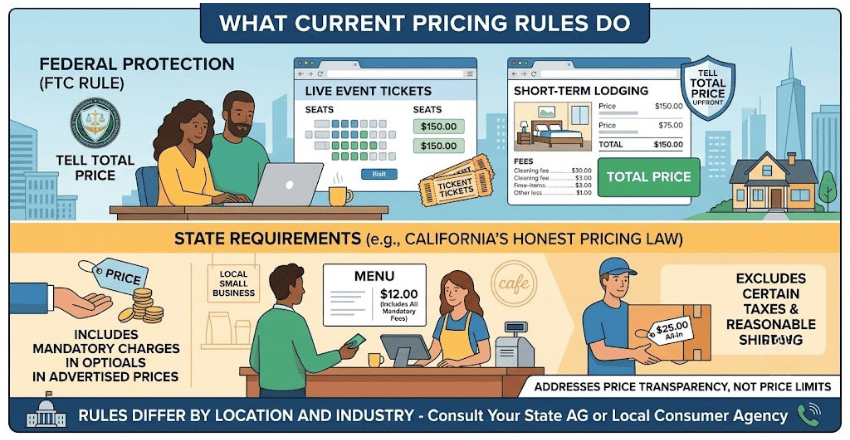
Federal protection isn’t a universal ban on every added cost. The FTC’s current rule focuses on live-event ticketing and short-term lodging. Covered sellers must tell customers the total price upfront and can’t misrepresent the nature or purpose of charges.
State requirements can be broader. California’s Honest Pricing Law generally requires most consumer businesses to include mandatory charges in advertised prices. It excludes certain government taxes and reasonable shipping expenses. The law addresses price transparency rather than setting price limits.
Rules differ by location and industry. A charge that appears unfair isn’t automatically unlawful. Your state attorney general or local consumer protection agency can explain the rules that apply where you live.
How to Avoid Junk Fees Before Paying?
Use this six-point checkout checklist:
- Request the all-in price. Ask for the full amount, including required charges.
- Compare totals between sellers. Don’t compare base rates with final prices.
- Remove optional add-ons. Review preselected boxes, upgrades, insurance, and donations.
- Take screenshots: Save the advertised offer and each checkout stage.
- Read cancellation terms. Check deadlines, renewal periods, and refund rules.
- Pause before payment. Leave the transaction when the final amount no longer offers good value.
Keeping your money in an account with fewer maintenance charges can also reduce unnecessary costs. If you’re comparing everyday banking options, understanding whether a high-yield checking account is worth it can help you earn interest while avoiding avoidable monthly fees.
What to Do After You’re Charged
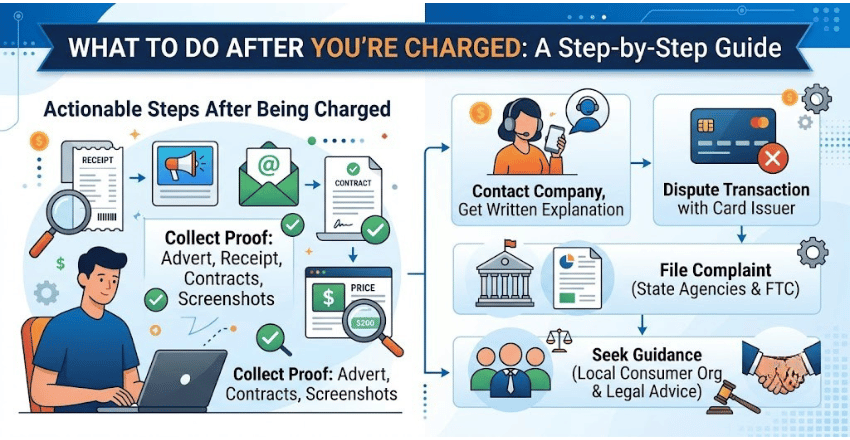
Start by collecting the advertisement, receipt, confirmation email, contract, and screenshots. Note when the price changed and whether the charge was described as mandatory.
Contact the company and request a written explanation. State the advertised amount, the added charge, and the desired outcome, such as a refund or correction.
When the business won’t resolve a billing error, consider these options:
- Dispute the transaction with your card issuer
- File a complaint with the appropriate state agency
- Report deceptive business practices to the FTC
- Ask a local consumer organization for guidance
- Seek legal advice when the financial loss is substantial
Don’t claim fraud when you knowingly accepted a clearly disclosed cost. Focus your complaint on missing information, an inaccurate description, unauthorized billing, or a difference between the agreement and the amount charged.
Check the Total, Not the Headline Price
A low advertised amount doesn’t always represent the cost you’ll pay. Compare all-in totals, question unfamiliar charges, remove optional extras, and save the terms shown before payment.
Add a ten-minute fee review to your monthly budgeting routine. That simple check can uncover recurring costs before they become permanent parts of your spending.
Conclusion
Junk fees can quietly increase the cost of everyday purchases, making products and services more expensive than they first appear. By comparing all-in prices, reviewing checkout pages carefully, reading account agreements, and monitoring your statements regularly, you can avoid many unnecessary charges.
A few extra minutes spent checking the final price before paying can help protect your budget, reduce surprise expenses, and make you a more informed consumer in 2026 and beyond. Staying informed about pricing rules and reviewing your bills regularly can help you challenge unfair charges and keep more of your money.
If you want to know about What Is an EFP then visit our Finance category.