PUA unemployment was a temporary federal program that helped workers who normally couldn’t receive standard unemployment insurance. It covered many freelancers, gig workers, independent contractors, and self-employed people affected by COVID-19.
The program is no longer accepting claims for current unemployment. It expired for weeks ending after September 6, 2021, although states may still handle old appeals, corrections, tax forms, fraud cases, and overpayment disputes.
| Key fact | Details |
| Full program name | Pandemic Unemployment Assistance |
| Common abbreviation | PUA |
| Created under | CARES Act |
| Main purpose | Extend unemployment support to workers outside regular state UI systems |
| Typical recipients | Self-employed workers, freelancers, contractors, gig workers, and some people with limited work histories |
| Federal expiration | September 6, 2021 |
| Can you file a new current claim? | No |
| Issues that may remain active | Appeals, overpayments, fraud investigations, tax records, and delayed payments for eligible past weeks |
Direct answer: PUA was a temporary COVID-19 unemployment program for people who often lacked access to regular state benefits. It ended nationwide in September 2021. Today, the term usually appears in old claim records, tax forms, appeal notices, identity-theft cases, or requests to repay benefits.
What Was PUA Unemployment?
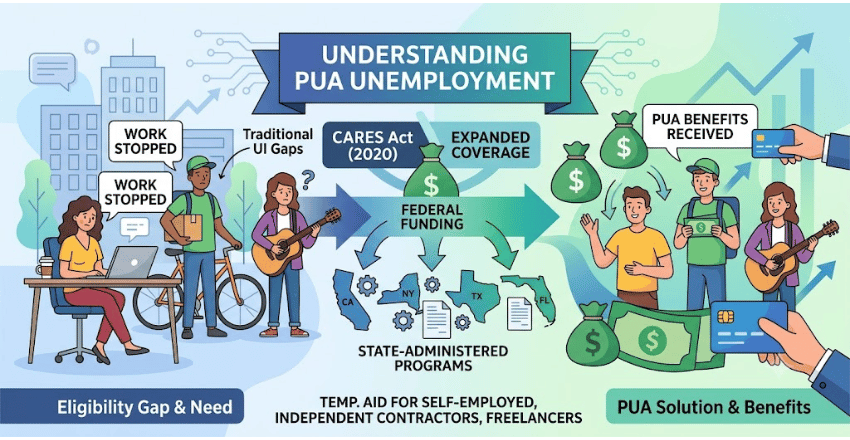
Pandemic Unemployment Assistance was introduced through the CARES Act in 2020. Its purpose was to expand unemployment coverage during the COVID-19 emergency. Traditional state unemployment insurance mainly serves employees whose employers pay unemployment taxes.
This structure often leaves self-employed people and independent contractors outside the system. PUA filled that gap temporarily. It allowed eligible workers to receive benefits when a qualifying pandemic-related reason stopped or reduced their work.
The program was funded by the federal government but administered by state unemployment agencies. That meant applications, documents, weekly certifications, appeals, and payment schedules varied by state. Claimants were also required to follow their state’s eligibility rules and reporting requirements to continue receiving benefits without interruption.
Who Qualified for PUA Benefits?
Eligibility depended on federal rules and each applicant’s circumstances. The program generally served people who weren’t eligible for regular unemployment compensation. This included many self-employed workers, independent contractors, freelancers, and gig workers whose income was affected by the pandemic.
Potentially eligible groups included:
- Self-employed workers
- Freelancers
- Independent contractors
- Gig-economy workers
- Part-time workers
- People without enough wage history for standard benefits
- Workers who had been scheduled to start a job that COVID-19 disrupted
Applicants also needed a qualifying pandemic-related reason for being unemployed, partially unemployed, or unable to work. PUA wasn’t intended as automatic income support for everyone who lost earnings. State agencies could request proof of prior employment or self-employment.
Is PUA Unemployment Still Available in 2026?
No. New benefits aren’t available for current weeks of unemployment.
Federal guidance states that PUA couldn’t be paid for weeks ending after September 6, 2021. In states using Saturday or Sunday benefit weeks, the final payable week could have ended on September 4 or September 5. A person may still receive correspondence about an older claim. This doesn’t mean the program has restarted.
Old cases can remain open because of:
- A pending appeal
- A corrected eligibility decision
- A delayed payment
- Missing employment documents
- An identity-verification review
- A suspected fraudulent claim
- An overpayment determination
- A repayment or waiver request
The U.S. Department of Labor still publishes administrative guidance because states continue resolving issues connected to expired CARES Act programs. Its unemployment resource page was updated on July 10, 2026, and includes current funding and administrative instructions for remaining program work.
How PUA Differed From Regular Unemployment Insurance
The two programs provided temporary income replacement, but they served different workers.
| Feature | Regular unemployment insurance | PUA |
| Program status | Ongoing state program | Temporary federal pandemic program |
| Main recipients | Eligible employees | Workers often excluded from regular UI |
| Administration | State unemployment agency | State agency under federal rules |
| Funding | Primarily state and federal unemployment taxes | Federal pandemic funding |
| Current claims | May be available based on state rules | Not available for current unemployment |
| Eligibility basis | Wages, separation reason, and state rules | Pandemic-related unemployment plus federal requirements |
Regular unemployment insurance remains available. Eligibility, benefit amounts, work-search rules, and filing procedures depend on your state. A self-employed person usually can’t assume that old PUA rules still apply. Anyone who loses work now should check their state labor department for current programs.
How Much Did PUA Pay?
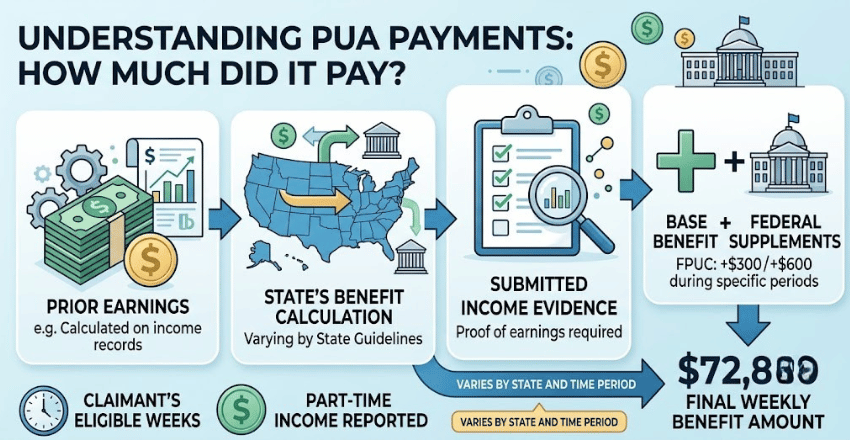
The amount wasn’t identical nationwide, as states calculated weekly benefits using federal guidelines and each claimant’s income records. During certain periods of the pandemic, eligible recipients also received additional federal supplements, such as Federal Pandemic Unemployment Compensation (FPUC).
These supplemental payments weren’t the same program as PUA. They appeared together because a person could qualify for a base unemployment payment and a temporary federal addition. Congress authorized these extra payments separately and made them available only during specific periods of the pandemic.
The final amount depended on factors such as:
- Prior earnings
- The state’s benefit calculation
- Submitted income evidence
- The claimant’s eligible weeks
- Federal supplements available during that period
- Any reported part-time income
Old payment records should be checked against the claimant’s state account and benefit determination. Online estimates from 2020 or 2021 may not match an individual award.
What Is a PUA Overpayment?
An overpayment occurs when a state decides that someone received more benefits than they were entitled to receive. This can happen because of an agency mistake, missing documents, unreported earnings, a reversed eligibility decision, or false information. The reason matters because it can affect repayment options.
A notice should usually explain:
- The amount owed
- The weeks involved
- Why the state believes the payment was incorrect
- Whether fraud is alleged
- The deadline for an appeal
- Available repayment or waiver procedures
Don’t ignore an overpayment notice. Appeal windows can be short, and missing the deadline may limit your options. States may waive certain nonfraudulent pandemic-benefit overpayments when the claimant wasn’t at fault, and repayment would violate fairness standards.
A practical overpayment checklist
Use this five-part review before responding:
- Match the claim number. Confirm that the notice belongs to you.
- Check the weeks. Compare each listed week with your payment history.
- Read the reason. Identify whether the issue involves income, identity, eligibility, or documents.
- Collect records. Save tax forms, invoices, contracts, emails, bank records, and state messages.
- Meet the deadline. Submit an appeal or waiver request using the method named in the notice.
Keep copies of everything you send. Record submission dates and confirmation numbers.
Are PUA Payments Taxable?
Unemployment compensation is generally taxable for federal income-tax purposes. The IRS instructs taxpayers to include unemployment payments in income unless a specific exclusion applies. Your state agency may issue Form 1099-G. Box 1 generally reports unemployment compensation paid during the tax year.
The temporary federal exclusion of up to $10,200 applied to qualifying unemployment compensation received in 2020. It wasn’t a permanent rule for every later tax year. The tax break was introduced as part of pandemic relief legislation to reduce the tax burden on eligible households.
Contact the state agency when:
- A 1099-G reports money you didn’t receive
- The amount doesn’t match your records
- Your name was used for an unauthorized claim
- The form relates to a different state
- A corrected form hasn’t arrived
Identity theft should also be reported through the state’s unemployment-fraud process. Don’t report benefits as your income when the state confirms they were paid through a fraudulent claim in your name.
What to Do If You Receive a PUA Letter Now
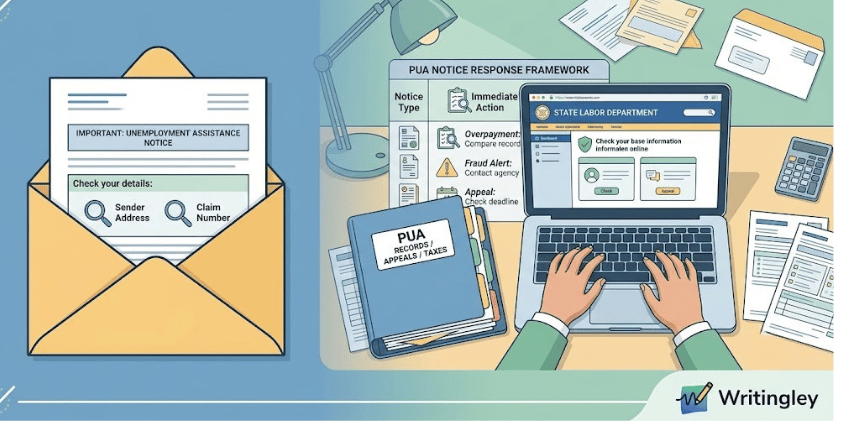
Start by checking whether the communication is genuine. Scammers often imitate labor departments and ask for personal information. Review the sender’s address, claim number, deadline, and instructions. Access your account by typing the state labor department’s address yourself instead of following an unexpected text-message link.
Next, identify what the letter requests. It may involve an appeal, proof of employment, tax correction, repayment, identity verification, or a claim you never filed. Read the notice carefully to understand any deadlines and the documents you need to provide.
Use the following response framework:
| Notice type | First action |
| Missing document request | Gather the exact records listed |
| Appeal decision | Check the filing deadline |
| Overpayment notice | Compare weeks and reasons with your records |
| Fraud alert | Contact the official state agency |
| 1099-G problem | Request a corrected tax form |
| Collection notice | Ask about appeal, waiver, or repayment rights |
After a job loss, reviewing your income, benefits, and bank activity can make it easier to stay on top of your finances. Understanding how to read a pay stub, choosing the right high-yield checking account, and keeping unemployment tax documents together can help you manage your money while searching for new work.
Can You Apply for Other Unemployment Benefits?
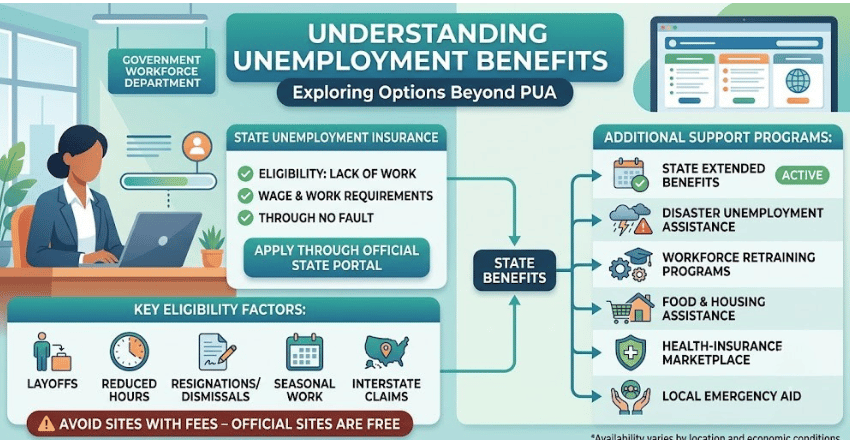
PUA has ended, but regular state unemployment insurance still exists.
You may qualify when you lose covered employment through no fault of your own and meet your state’s wage and work requirements. Rules differ for layoffs, reduced hours, resignations, dismissals, seasonal work, and interstate claims.
Visit your official state workforce or labor department. Avoid websites that charge a fee to file an unemployment claim. Most state agencies allow you to file claims, upload documents, and check your claim status through secure online portals at no cost.
You may also need to explore:
- State extended benefits, when active
- Disaster Unemployment Assistance after a declared disaster
- Workforce retraining programs
- Food or housing assistance
- Health-insurance marketplace coverage
- Local emergency aid
Availability changes by location and economic conditions.
Conclusion
PUA was an emergency program, not a permanent form of unemployment insurance. It expanded coverage during the pandemic but stopped paying benefits for new weeks in September 2021. Old claims can still create tax, appeal, identity-theft, and repayment issues.
Read every notice carefully, verify it through your state’s official website, preserve your records, and respond before any stated deadline. For your next step, review your current income, bills, and emergency savings. Writingley’s monthly savings calculator can help you turn that review into a basic financial plan.
If you want to know about High Yield Checking Account then visit our Finance category.