Choosing the best brokerage accounts comes down to how you plan to invest. Fidelity is our top overall pick for its broad investment selection, fractional shares, research tools, and $0 online commissions on stocks and ETFs. Active traders may prefer Interactive Brokers, while beginners may find Charles Schwab or SoFi easier to navigate.
This guide compares seven leading U.S. platforms as of July 2026. Fees, rates, promotions, and eligibility rules can change, so review each broker’s current disclosures before opening an account.
| Key detail | What to know |
| Best overall | Fidelity |
| Best for beginners | Charles Schwab |
| Best for advanced traders | Interactive Brokers |
| Best for trading education | E*TRADE |
| Best for active mobile trading | Webull |
| Best simple mobile experience | Robinhood |
| Best for financial guidance | SoFi Invest |
| Typical minimum | $0 at most listed brokers |
| Stock and ETF commissions | Usually $0 for online U.S.-listed trades |
| Important protection | Confirm FINRA registration and SIPC membership |
Direct answer: Fidelity is the strongest all-around choice for many investors because it combines low trading costs, fractional shares, research, retirement accounts, and a wide investment menu. Charles Schwab is a close alternative for beginners, with strong customer support. Interactive Brokers stands out for advanced tools, global markets, and sophisticated trading needs.
Best Brokerage Accounts Compared
| Broker | Best for | Main limitation |
| Fidelity | Best overall | Platform may feel busy to new users |
| Charles Schwab | Beginners and support | Some specialist products carry fees |
| Interactive Brokers | Advanced and global trading | Steeper learning curve |
| E*TRADE | Education and trading tools | Options contracts usually cost extra |
| Webull | Charts and active mobile trading | Less suited to hands-off beginners |
| Robinhood | Simple mobile investing | Research depth is more limited |
| SoFi Invest | Guidance and financial planning | Smaller investment menu than full-service brokers |
Commission-free trading does not mean every transaction is free. Options contract charges, regulatory assessments, wire fees, assisted-trade charges, subscriptions, mutual fund fees, and transfer costs may still apply.
1. Fidelity: Best Overall

Fidelity offers a strong balance of cost, selection, research, and customer support. Investors can trade online U.S. stocks and ETFs without commissions, and fractional-share purchases can start at $1. The platform also supports mutual funds, bonds, options, certificates of deposit, retirement plans, and other products.
Among the Best Brokerage Accounts, Fidelity is a practical choice for someone building a long-term portfolio. You can keep taxable investments, retirement savings, and cash-management tools within one company.
Pros
- $0 online U.S. stock and ETF trades
- Fractional shares starting at $1
- Broad investment selection
- Extensive planning and research tools
- Around-the-clock access to trading specialists
Cons
- The number of tools can overwhelm a first-time investor
- Margin, options, bonds, and some funds may create added costs
Verdict: Fidelity is our top pick for an investor seeking a single provider to support both current and future financial needs.
2. Charles Schwab: Best for Beginners
Charles Schwab combines an approachable investing experience with advanced features you can use later. It charges $0 for standard online stock and ETF trades and has no standard account or trade minimum. Options generally carry a $0.65 contract charge.
Schwab also offers educational material, branch access, retirement products, and the thinkorswim trading platform. Among the best brokerage accounts, this makes it suitable for investors who want guidance without switching providers as their experience grows.
Pros
- No standard account minimum
- Strong educational resources
- Physical branches and customer support
- Access to thinkorswim tools
- Wide range of funds and retirement products
Cons
- Broker-assisted trades cost more
- Some mutual funds and specialist investments have transaction charges
Verdict: Schwab is the best starting point for people who value support, education, and a platform that can grow with them.
3. Interactive Brokers: Best for Advanced Traders
Interactive Brokers serves investors who need professional tools, global access, or detailed order controls. Its platform provides access to more than 170 markets, while IBKR Lite offers $0 commissions on U.S.-listed stocks and ETFs with no account minimum.
Among the best brokerage accounts, this broker is particularly useful for international investors, active traders, and those who trade across several asset classes. Its pricing structure and platform choices require more study than a basic investing app.
Pros
- Access to markets around the world
- Advanced order types and analysis tools
- No account minimum
- Low-cost IBKR Lite option
- Suitable for multi-currency portfolios
Cons
- More complex than beginner-focused apps
- Market data and certain services can have separate charges
Verdict: Interactive Brokers is our choice for experienced investors who will use its international access and technical capabilities.
4. E*TRADE: Best for Education and Trading Tools
E*TRADE provides two mobile applications, market research, educational resources, and trading platforms for different experience levels. It charges $0 for online U.S.-listed stocks, ETFs, mutual funds, and options trades, though options normally have a $0.65 contract fee.
That charge drops to $0.50 for customers who meet its quarterly trading threshold. Among the best brokerage accounts, the platform is useful for investors who want to learn while managing their own portfolios.
Pros
- Extensive educational library
- Beginner and advanced trading platforms
- Broad investment selection
- No account minimum or standard maintenance fee
- Retirement and banking products available
Cons
- Options contract fees
- Bond and futures transactions carry separate costs
Verdict: E*TRADE suits investors who want detailed learning materials without sacrificing active-trading features.
5. Webull: Best for Active Mobile Trading
Webull focuses on charts, technical indicators, paper trading, extended-hours access, and active-investor tools. It does not charge commissions on standard stock, ETF, and options transactions, although exchange, regulatory, and certain contract fees may apply.
Among the best brokerage accounts, the interface works well for people who study price movements and place frequent trades. Long-term investors seeking financial planning or a large mutual fund marketplace may find other providers more suitable.
Pros
- Advanced charting tools
- Paper-trading features
- $0 standard stock and ETF commissions
- Desktop, browser, and mobile platforms
- Designed for active users
Cons
- Limited personal financial guidance
- The trading-focused design may encourage unnecessary activity
Verdict: Webull is a strong choice for active investors who want detailed charts and a capable mobile platform.
Readers interested in short-term trading should first review Writingley’s day-trading guide for beginners, which covers paper trading, position sizing, and loss limits.
6. Robinhood: Best for a Simple Mobile Experience

Robinhood made mobile stock investing easier through a simple interface and fractional purchases starting at $1. Standard stock, ETF, and options investing is commission-free, but regulatory charges and service fees can still apply. Robinhood Gold is an optional paid subscription with additional features.
Among the best brokerage accounts, it may suit a new investor who wants to buy a few diversified funds. Investors who need deeper research, mutual funds, or advanced retirement planning may prefer Fidelity or Schwab.
Pros
- Easy-to-use mobile interface
- Fractional investing
- No standard stock or ETF commission
- Low starting amount
- Recurring investment tools
Cons
- Less research than full-service firms
- Some features require a Gold subscription
Verdict: Robinhood works best for mobile-first users who value simplicity more than extensive research.
7. SoFi Invest: Best for Financial Guidance
SoFi Invest combines self-directed trading, automated portfolios, IRAs, options, and access to financial planning. Customers can begin with $5, and standard stock and ETF trades are commission-free. Its robo-adviser currently charges a management fee, so users should check the latest pricing before enrolling.
SoFi may appeal to people who already use the company’s banking or lending products. Its investment selection, compared with some of the best brokerage accounts, is not as extensive as Fidelity’s or Schwab’s.
Pros
- Low starting requirement
- Self-directed and automated investing
- Access to credentialed financial planners
- Straightforward mobile experience
- Useful for existing SoFi members
Cons
- Robo-adviser fee
- Fewer advanced trading features
- More limited product selection
Verdict: SoFi is a good fit when financial guidance and an integrated money app matter more than specialist trading tools.
How We Chose the Best Brokerage Accounts?

We compared each provider across seven practical areas:
- Standard trading commissions
- Account and maintenance minimums
- Available investments
- Research and educational tools
- Mobile and desktop experience
- Customer support
- Suitability for a specific investor type
Our ranking does not assume that a single platform suits everyone. An investor buying broad-market funds needs different tools from someone trading international options. We also favored regulated firms with clear fee disclosures. FINRA’s BrokerCheck lets you review the registration, employment history, licenses, and reported disclosures of brokerage firms and professionals.
How to Choose the Right Broker?
Start with your investing plan rather than a promotional bonus. Ask what you plan to buy, how often you expect to trade, and whether you need advice.
Review the Full Fee Schedule
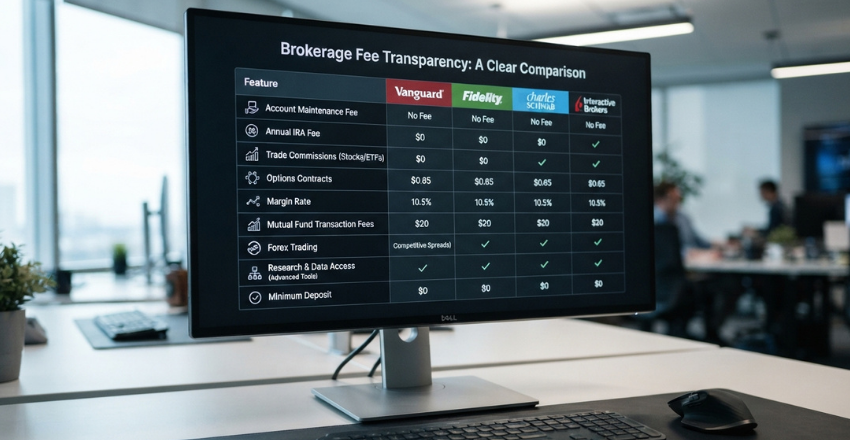
A $0 headline commission covers only certain transactions. The SEC advises investors to check maintenance fees, transfer costs, account-closing charges, margin interest, paper statement fees, and product-specific expenses.
Match the Platform to Your Strategy
Long-term investors may prioritize retirement tools, automatic purchases, low-cost funds, and useful research when comparing the best brokerage accounts. Active traders may care more about order controls, market data, charts, and execution. Before funding an investment account, use Writingley’s monthly savings calculator to estimate how much you can contribute without affecting short-term obligations.
Check Available Investments
Confirm that the broker supports the assets you expect to buy. Common choices include:
- Stocks
- Exchange-traded funds
- Mutual funds
- Bonds and Treasury securities
- Options
- Fractional shares
- Retirement accounts
Access does not mean every product is appropriate. Options, margin, leveraged funds, and concentrated positions involve added risk.
Understand SIPC Protection
SIPC protection may restore missing customer securities and cash when a member brokerage firm fails. Coverage is generally limited to $500,000 per customer, including up to $250,000 for cash claims. It does not reimburse ordinary market losses. Confirm membership directly rather than relying solely on a logo.
Keep Investing Money Separate
Money needed for rent, debt payments, emergencies, or near-term purchases should usually remain outside the market. Writingley’s guide to tracking your expenses can help identify what remains after essential costs.
Our Final Recommendation
Choose Fidelity for the strongest all-around package. It offers low-cost trading, fractional shares, research, retirement products, and a wide range of investment options, making it one of the best brokerage accounts for many investors. Choose Schwab when education and customer support matter most. Pick Interactive Brokers when you need global markets or advanced tools.
E*TRADE works well for investors learning active-trading skills, while Webull suits chart-focused users. Robinhood favors simplicity, and SoFi offers an appealing mix of investing and financial guidance. Compare the final two providers using their current fee schedules.
Then open one account, fund it with an affordable amount, and begin with investments you understand. This article is for general educational purposes and does not provide personalized investment, tax, or legal advice. Investing involves risk, including possible loss of principal.
Want to know about Bear Trap Explained? Check out our Investing category.