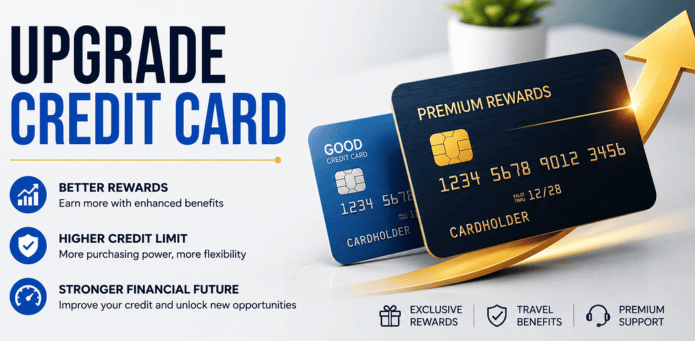
The upgrade credit card combines a reusable credit line with fixed installment payments. It may suit borrowers who want a fixed payoff schedule rather than an open-ended minimum payment. Yet its APR, fees, and loan-like structure make it not the right choice for every cardholder.
| Upgrade Credit Card | Key detail |
| Product type | Credit line with closed-end installment loans |
| Current advertised APR range | 14.99%–29.99%, based on creditworthiness |
| Annual fee | $0 on Cash Rewards and Life Rewards; $39 on Select |
| Cash-back options | Up to 3% in eligible categories |
| Pre-approval | Available with no initial credit-score impact |
| Payment structure | Fixed payments over a set term |
| Best suited to | Borrowers who prefer a defined payoff schedule |
| Main concern | Less payment flexibility than a standard card |
The issuer states that its credit lines currently carry APRs from 14.99% to 29.99%. The lowest rates require AutoPay. Fees may include up to 5% for balance transfers, up to 3% for foreign transactions, and up to $29 for a late payment.
What Is the Upgrade Credit Card?
The product works at stores and websites that accept Visa. Unlike a normal revolving card, each eligible transaction can become a closed-end loan with a fixed rate and repayment term.
That structure gives you a clearer payoff date. It also results in a larger required payment than the minimum on many traditional cards.
As you repay your balance, additional credit may become available. The issuer warns that the line doesn’t replenish automatically. Future access can depend on your credit profile, account history, and market conditions. Rates on existing balances remain fixed, although rates for future transactions may change.
How the Upgrade Credit Card Works
You begin by checking whether you’re pre-approved. The upgrade says this initial check uses a soft credit inquiry, so it doesn’t affect your credit score. A full application may involve a hard inquiry.
Once approved, you receive a credit line, APR, and repayment terms. You can use the card for purchases anywhere Visa is accepted. AutoPay is available for scheduled payments.
Cash-back rewards aren’t always earned at the moment of purchase. On the main rewards products, eligible rewards are generally credited as you repay purchases. This detail matters if you expect rewards to appear immediately. Writingley’s credit education hub covers credit reports and responsible borrowing.
Current Card Options Compared
Upgrade currently promotes three main products on its card comparison page. Each serves a different type of applicant.
| Card | Annual fee | Rewards | Better for |
| Cash Rewards | $0 | Unlimited 1.5% cash back on eligible purchases when repaid | Simple flat-rate rewards |
| Life Rewards | $0 | 3% on eligible gas, grocery, streaming, and utility purchases; 1% elsewhere | Common household expenses |
| Select | $39 | No standard flat-rate rewards are advertised | Applicants seeking a smaller credit line |
Cash Rewards
Cash Rewards is the easiest version to understand. It earns unlimited 1.5% cash back on eligible purchases when you pay them back.
The issuer also advertises no annual fee. A conditional $200 offer may be available when you open an eligible Rewards Checking Preferred account and complete three qualifying debit transactions. Offers and conditions can change.
Pros
- Flat rewards rate with no category tracking
- No annual fee
- Pre-approval check available
- Accepted wherever Visa is accepted
Cons
- Rewards depend on repayment
- APR may be high for some applicants
- Balance-transfer and foreign-transaction fees may apply
Life Rewards
Life Rewards targets recurring household expenses. It currently earns 3% cash back on eligible gas, grocery, streaming, and utility purchases. Other eligible purchases earn 1%.
Target and Walmart purchases are excluded from the advertised grocery rate. Merchant category codes determine whether a transaction qualifies, so a purchase may not receive the rate you expected.
Pros
- No annual fee
- Useful bonus categories
- Unlimited advertised rewards
- Fixed repayment schedule
Cons
- Only 1% back outside bonus categories
- Merchant coding can affect rewards
- Paying interest can exceed the value of cashback
Select
Select charges a $39 annual fee and doesn’t advertise a standard rewards rate. The official comparison page positions it as an option for customers seeking access to credit rather than premium rewards.
That annual fee makes it harder to recommend. A secured card with no annual fee may offer a cheaper path for someone building credit, depending on deposit requirements and approval odds. For more guides on managing income and expenses, visit Writingley’s budgeting resources.
Upgrade Versus a Traditional Credit Card
The key difference is how unpaid purchases are repaid.
| Feature | Upgrade product | Traditional revolving card |
| Monthly payment | Set by installment terms | Usually, a flexible minimum |
| Payoff date | Defined when the loan is created | Can remain open-ended |
| Interest rate | Fixed for each existing balance | Often variable |
| Payment flexibility | Lower | Higher |
| Risk of prolonged minimum payments | Reduced | Higher if you pay only the minimum |
| Introductory 0% APR | Not a main advertised feature | Common on selected cards |
A fixed schedule can help prevent years of minimum payments. The issuer illustrates this with a $5,000 balance at 23% APR. Its example shows a 36-month payment of $196.13 and total interest of $2,060.20. The example is promotional, uses specific assumptions, and doesn’t represent every applicant’s offer.
A standard card can still cost less when you pay the full statement balance each month. You might also save more with a 0% introductory offer, provided you repay the balance before the promotional period ends.
Who Is It Best For?
This product may fit you when
- You often carry balances and want a defined payoff date.
- You can afford a larger fixed monthly payment.
- Your approved APR beats the rates on your existing cards.
- You value simple cash back but may not qualify for leading rewards cards.
- You want to check potential terms before submitting a full application.
It may be a poor choice when:
- Your income changes from month to month.
- You need the freedom to make a minimum payment.
- You qualify for a long 0% introductory APR.
- You regularly travel abroad and want to avoid foreign-transaction fees.
- You expect rewards to offset substantial interest charges.
Costs to Review Before Applying
Don’t focus only on the annual fee. Your approved APR will usually have a much larger effect on the total cost.
Review these terms before accepting an offer:
- The APR is attached to new purchases
- The monthly payment and payoff period
- The total interest over the full term
- Any balance-transfer fee
- Any foreign-transaction fee
- The late-payment fee
- The conditions attached to a welcome offer
A $200 bonus won’t compensate for hundreds of dollars in avoidable interest. Compare the complete repayment cost, not the first-year reward value.
Verdict: Is the Upgrade Credit Card Worth It?
The Upgrade Credit Card is a reasonable option for someone who carries balances and needs a structured repayment plan. Cash Rewards is the strongest simple option, while Life Rewards may provide more value for qualifying household spending.
Our verdict is less positive for consumers who always pay in full or qualify for a 0% APR card. Those users can often earn rewards without taking on installment interest. Select is also difficult to favor because it charges an annual fee without offering standard cash-back rewards.
Check your pre-approved APR and payment first. Then compare that offer with a traditional cash-back card, a 0% card, and a personal loan. Apply only when the fixed repayment structure produces the best total cost for your situation. Writingley’s personal finance section can support broader research on saving and money management.