

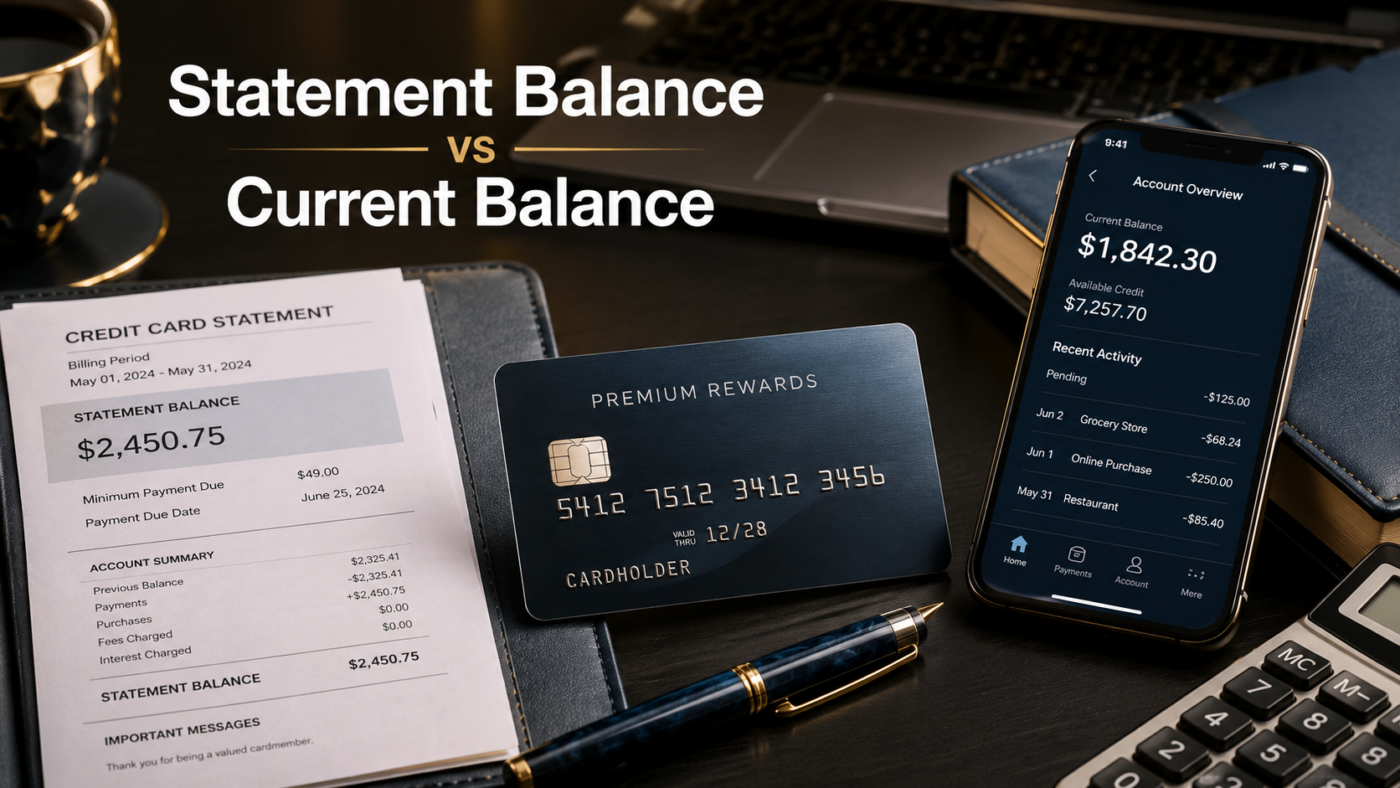
Understanding statement balance vs current balance helps you choose the right credit card payment. Your statement balance is the amount recorded at the close of your last billing cycle. Your current balance reflects more recent account activity. In most cases, paying the full statement amount by its due date is enough to avoid interest on purchases.
| Feature | Statement balance | Current balance |
| What it represents | Amount owed when the last billing cycle ended | Amount currently owed on the account |
| How often it changes | Usually once per billing cycle | Changes as transactions and payments post |
| Includes recent purchases | No, if made after the closing date | Usually includes posted recent purchases |
| Amount normally needed to avoid purchase interest | Yes, when paid in full by the due date | More than required in most cases |
| May affect available credit | Yes | Yes |
| Can be lower than the other balance | Yes | Yes |
Direct answer: Pay your full statement balance by the payment due date to avoid interest on purchases and retain your grace period. Paying the current balance is optional, but it can reduce your outstanding debt, restore available credit, and potentially lower the balance reported to credit bureaus.
What Is A Statement Balance?
A statement balance is a snapshot of your account at the end of a billing cycle. It includes posted purchases, fees, interest, payments, refunds, and credits recorded during that period.
Once the issuer creates your monthly statement, this figure usually stays fixed. New transactions don’t change it. They become part of the following billing cycle instead.
Your statement also shows a payment due date and a minimum payment. The Consumer Financial Protection Bureau explains that paying at least the minimum by the due date keeps the account from being treated as late. Paying only the minimum can lead to more interest and a much longer repayment period.
What Is A Current Balance?
Your current balance is the amount owed based on the latest posted account activity. It starts with your previous statement amount and then updates as new purchases, payments, credits, fees, and refunds post.
Suppose your statement closes with a $600 balance. You then spend another $150 and make a $100 payment. Your current amount would generally be $650 after both transactions post.
Pending purchases may be handled differently by each issuer. They may appear in your account without being included in the displayed current amount. Pending authorizations can still reduce your available credit.
Statement Balance vs Current Balance: Key Differences
The biggest difference is timing. One number records what you owed on a past closing date. The other follows account activity after that date.
Chase describes the statement amount as the total owed at the end of the last billing cycle. The current figure represents what you owe at a particular moment and may change throughout the month.
Why The Current Amount May Be Higher?
Your current amount is often higher when you make purchases after the last billing cycle closed.
For example:
- Your billing cycle closes with $800 owed.
- Your new statement lists $800.
- You spend $200 during the next cycle.
- Your account now shows a current balance of $1,000.
- You still need to pay the $800 statement amount by its due date.
The extra $200 will normally appear on your next statement. You can pay it early, but it isn’t usually due with the previous bill.
Why The Statement Amount May Be Higher?

The statement figure may be higher when you make a payment or receive a refund after the closing date.
Assume your last statement lists $500. You then make a $300 payment without adding new charges. Your current balance may drop to $200, while the statement still shows $500.
You don’t need to pay another $500. Your payment has already reduced what you owe. Check the remaining statement amount or payment status in your account before scheduling another transfer.
Which Balance Should You Pay?
Statement balance vs current balance: pay the full statement amount by the due date when your goal is to avoid interest on normal purchases. This approach covers everything billed during the completed cycle without paying early for newer transactions.
Citi notes that paying the full statement balance by the due date can help you avoid interest on purchases when your card offers a grace period. Paying less may cause you to lose that grace period and incur interest on unpaid and future purchases.
Paying the current amount can still make sense. It brings your account closer to zero and restores more available credit. It may also help when you’re preparing for a large purchase or trying to reduce reported utilization.
When Paying the Current Amount Makes Sense?
Consider paying the entire current amount when:
- You want to eliminate all posted card debt.
- Your balance is close to the credit limit.
- You need more available credit soon.
- You’re trying to reduce utilization before applying for financing.
- You find zero-balance budgeting easier to manage.
Paying early doesn’t erase pending transactions. A newly posted charge can cause the account to show a balance again, even after you previously paid it to zero.
When Paying the Statement Amount Is Enough?

The statement amount is usually sufficient when:
- You pay in full every month.
- Your account still has a purchase grace period.
- You don’t need to free additional available credit.
- You prefer to keep cash in your bank account until the due date.
- You have autopay configured for the full statement amount.
Review your card agreement when you’ve carried debt from an earlier month. Grace-period rules can differ, and residual interest may appear after a payoff.
How Each Payment Affects Interest?
A grace period is the time between the statement closing date and payment due date. Many cards don’t charge interest on new purchases when you pay the statement amount in full during that window.
You may lose this benefit if you carry part of a billed amount into the next cycle. In that situation, interest can continue to accrue until the debt is paid. Cash advances and balance transfers may also begin accruing interest immediately, depending on your terms.
Paying only the minimum keeps the account current, but it doesn’t prevent interest from accruing. The CFPB advises paying more than the minimum to lower borrowing costs and repay debt sooner.
How Balances Affect Your Credit Score?
Statement balance vs current balance: credit scoring models consider credit utilization, which compares reported revolving debt with available credit. A reported amount of $2,000 on a $10,000 limit represents 20% utilization.
Your issuer may report account information once per month, often near the statement closing date. The amount on your credit report may therefore resemble your statement figure rather than the live number in your card app. Reporting practices vary by issuer.
Paying before the closing date can reduce the amount that gets reported. This can be useful when your card shows high utilization, even when you plan to pay the bill in full.
The CFPB confirms that credit scoring considers how much revolving credit you’re using compared with how much is available. It also notes that a high amount can affect a score even when the account is paid soon afterward.
Don’t Confuse Either Amount With The Minimum Payment

The minimum payment is the smallest amount required by the due date. It isn’t the amount needed to avoid interest or pay off your debt quickly.
Here’s the practical difference:
- Minimum payment: Helps prevent the account from becoming late.
- Statement amount: Usually avoids purchase interest when paid in full.
- Current amount: Pays all currently posted debt.
Late or missed minimum payments may result in fees, loss of promotional terms, or damage to your payment history. The CFPB also notes that a missed payment can trigger other consequences under the card agreement.
A Simple Payment Rule To Follow
Use this three-step check each month:
- Confirm the payment due date.
- Verify how much of the statement remains unpaid.
- Pay that remaining amount in full before the deadline.
Set autopay for the full statement amount when your cash flow supports it. Keep enough money in the linked bank account to prevent a returned payment.
Check the current amount separately when managing utilization or available credit. This keeps you from confusing what is due with what you’ve spent since the statement closed.
Frequently Asked Questions
In statement balance vs current balance, which should I pay?
Will I pay interest if I pay the statement amount?
Why is my current amount zero when my statement shows money due?
Does paying the current amount improve my credit score?
Should I pay before the statement closing date?
What happens if I only make the minimum payment?
The Bottom Line
Your statement amount tells you what was billed during the completed cycle. Your current amount tells you what you owe based on more recent activity.
For most people who pay in full, the best routine is simple: pay the full statement amount by the due date. Pay more when you want to reduce debt, restore available credit, or lower utilization sooner.
Review your next credit card statement today. Confirm the closing date, due date, remaining statement amount, and autopay setting before making your payment.
Apart from that, if you want to know more interesting articles, then visit our Credit category.

