Restaurant insurance protects your food business from losses linked to customer injuries, kitchen fires, employee accidents, damaged equipment, food contamination, and other operational risks. Most owners need several policies rather than one universal plan. Your final coverage package depends on your location, staffing, alcohol sales, delivery services, property, and equipment. There is more on this in Is Pet Insurance Worth It.
| Restaurant Insurance | What restaurant owners should know |
| Core protection | General liability and commercial property coverage |
| Common policy package | A business owner’s policy, often called a BOP |
| Employee coverage | Workers’ compensation may be legally required |
| Alcohol sales | Liquor liability may be needed |
| Delivery operations | Commercial or hired and non-owned auto coverage may apply |
| Typical cost factors | Location, revenue, payroll, seating, equipment, claims, and alcohol sales |
| Best next step | Compare itemized quotes from licensed insurance professionals |
Key Takeaways
- A BOP may combine property, liability, and business income protection.
- Workers’ compensation requirements depend on state law and staffing.
- Alcohol sales, delivery vehicles, and online ordering create added exposures.
- Equipment breakdown and spoilage coverage can protect costly food inventory.
- The cheapest quote isn’t always the policy with the best protection.
- Policy exclusions matter as much as the listed coverage limits.
What Does Restaurant Insurance Cover?

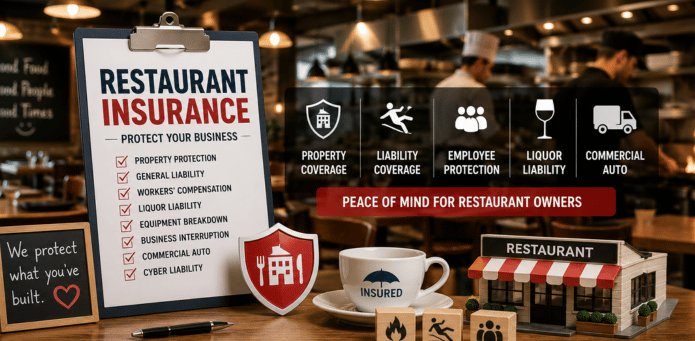
Restaurant insurance is a group of commercial policies designed for food-service businesses. It can cover legal expenses, medical bills, repairs, replacement equipment, lost income, and other eligible costs after a covered incident. No single policy covers every risk. A small coffee shop may need a different package from a full-service bar, caterer, franchise, or delivery-focused kitchen. For example, a café without alcohol sales may not need liquor liability.
A restaurant that sends employees deliveries may need auto-related protection. A venue that owns its building will also have different property needs from a tenant. The goal is to match significant exposure with a suitable policy. That means reviewing how your business serves customers, employs staff, prepares food, accepts payments, and moves supplies.
Restaurant Insurance Coverage to Consider
General Liability Insurance
General liability covers common third-party claims. These may involve bodily injury, property damage, or certain advertising injuries. A typical restaurant claim could begin when a guest slips on a wet floor. The policy may help cover eligible medical expenses, legal defense costs, and settlements. It may also respond when restaurant operations damage someone else’s property.
Product liability protection is often included within general liability coverage. This part may apply when a customer claims that the served food caused an illness or injury. Review the policy’s limits, deductible, exclusions, and product-related language. Coverage decisions always depend on the contract and the facts surrounding a claim.
Commercial Property Insurance
Commercial property coverage protects physical assets against listed or covered causes of loss. These assets can include:
- Ovens, refrigerators, and freezers
- Tables, chairs, fixtures, and décor
- Computers and point-of-sale equipment
- Food inventory and beverages
- Tenant improvements
- The building, when owned by the business
Fire is a major concern in commercial kitchens because of open flames, hot cooking surfaces, grease, and electrical equipment. Property protection may help pay for repairs or replacements after a covered fire. Check whether the policy values property at replacement cost or actual cash value. Actual cash value can subtract depreciation, leaving you with a larger replacement expense.
Business Owner’s Policy
A business owner’s policy combines several forms of protection in one package. A typical BOP includes general liability, commercial property, and business income coverage. The Hartford identifies a BOP as a common starting point for restaurant owners. Its restaurant materials describe the package as including liability, property, and business income protection.
Bundling can simplify administration and may cost less than buying each component separately. Still, eligibility and included protection differ by insurer. A BOP normally doesn’t replace every other policy. Workers’ compensation, commercial auto, liquor liability, and employment practices coverage are often purchased separately.
Workers’ Compensation Insurance
Workers’ compensation can cover medical care and part of an employee’s lost wages after a work-related injury or illness. It may also provide employer liability protection.
Restaurant employees face several workplace hazards, including:
- Slippery floors
- Hot liquids and cooking surfaces
- Sharp knives
- Heavy supplies
- Repetitive movements
- Burns from grease or steam
Requirements differ by state, business structure, and employee count. Insureon notes that most states require workers’ compensation for restaurants with employees. Confirm your obligations with a licensed professional or state agency. Penalties for operating without required coverage can be significant.
Business Interruption Insurance
Business interruption, also called business income coverage, may replace eligible income when a covered property loss forces you to suspend operations. Suppose there is electrical fire damage to your kitchen. Property insurance may pay for eligible repairs, while business income coverage may help with lost revenue and continuing expenses during the restoration period.
Coverage often depends on physical damage caused by an insured peril. Closure alone doesn’t guarantee payment. Flooding, utility interruptions, contamination, civil authority orders, and communicable diseases may require special language or separate endorsements. Ask how the insurer calculates lost income. You should also review waiting periods, restoration periods, payroll treatment, and extra expense limits.
Liquor Liability Insurance
Restaurants serving alcohol face risks that aren’t always covered by standard general liability policies. Liquor liability can respond when an intoxicated customer causes injury or property damage, and the business is accused of contributing to the incident. The protection may cover eligible legal fees, medical costs, damages, and settlements. Requirements can depend on state law, licensing rules, lease terms, or contractual obligations.
Businesses serving beer, wine, or spirits should disclose those sales accurately. Insurers may consider alcohol revenue, closing times, staff training, entertainment, security, and prior incidents when setting up terms. Host liquor coverage isn’t a substitute for liquor liability when selling alcohol is part of your regular business.
Equipment Breakdown and Food Spoilage Coverage
Standard property policies may not fully cover internal mechanical or electrical breakdowns. Equipment breakdown protection can address eligible damage to refrigeration systems, boilers, electrical panels, and other essential machinery.
Food spoilage coverage can help replace inventory lost after a covered refrigerator failure or power-related event. This can matter when a walk-in freezer contains thousands of dollars in meat, seafood, dairy products, or prepared food.
Review what triggers spoilage coverage. Some policies require direct equipment damage. Others may offer broader protection through endorsement. Keep maintenance records and temperature logs. These documents can support risk management and may help after a claim.
Commercial Auto and Cyber Insurance
Commercial auto coverage may be necessary when the company owns vehicles used for deliveries, catering, supply collection, or other business tasks. Employee-owned vehicles create another issue. A hired and non-owned auto policy may cover certain liability exposures when employees use personal or rented vehicles for work.
Cyber coverage is increasingly relevant because restaurants process payment cards, store employee records, manage online orders, and rely on connected point-of-sale systems. It may help with eligible breach response, notification, data recovery, legal costs, and business interruption. Insureon recommends cyber protection for businesses that store customer information and highlights point-of-sale systems as a common restaurant exposure.
How Much Does Coverage Cost?

There isn’t one reliable price for every establishment. Premiums depend on the business’s risk profile and chosen limits. Insureon reports that its restaurant customers pay an average of $251 per month for a BOP. It also lists average monthly figures of $141 for general liability, $113 for workers’ compensation, and $41 for liquor liability. These figures represent its customer data, not guaranteed market prices.
A separate 2026 guide gives examples ranging from about $1,500 annually for a small sandwich shop to around $6,000 for a larger operation with property and cooking exposures. The publisher stresses that costs vary significantly.
Factors that can affect your premium include:
- Location and local claim patterns
- Annual revenue
- Payroll and employee count
- Building size and age
- Cooking methods
- Fire-suppression systems
- Alcohol sales
- Delivery services
- Equipment and inventory values
- Coverage limits and deductibles
- Prior insurance claims
Use published averages only for early budgeting. An underwritten quote is more useful because it reflects your specific operation.
How to Choose the Right Policy Package
Start with a written list of your largest financial exposures. Don’t begin by asking which policy is the cheapest.
Gather the information insurers will request:
- Annual and projected revenue
- Payroll and employee count
- Seating capacity and square footage
- Building ownership or lease details
- Equipment and inventory values
- Alcohol sales as a share of revenue
- Delivery and catering activities
- Fire, security, and suppression systems
- Prior claims
- Requested limits and deductibles
Request itemized quotes with matching limits. Otherwise, a lower premium may reflect narrower terms rather than a better price. Compare exclusions for foodborne illness, assault and battery, communicable disease, flood, sewer backup, utility failure, cyber incidents, and employee vehicle use.
Ask the agent to explain any exclusion that could affect a normal part of your operation. You should also consider the insurer’s claims process and financial strength. Saving a small amount on the premium provides little value when the policy omits a major exposure.
A Simple Coverage Decision Framework

Use this three-part test for each risk:
| Question | Why it matters |
| How likely is the event? | Frequent risks may justify stronger controls or lower deductibles. |
| How large could the loss be? | Severe losses may threaten payroll, property, or continued operation. |
| Can the business absorb it? | Losses beyond available cash may need to be transferred through insurance. |
For example, a brief refrigerator repair may be manageable with operating cash. A kitchen fire that closes the business for three months may not be so. This framework helps separate minor operating expenses from events that could threaten the company.
Ways to Reduce Your Premium
Risk controls can sometimes improve eligibility or pricing. Consider:
- Maintaining kitchen fire-suppression systems
- Training employees on food safety and alcohol service
- Documenting cleaning and inspection schedules
- Repairing damaged flooring
- Installing monitored alarms and cameras
- Maintaining refrigeration equipment
- Reviewing driving records
- Using strong payment and cybersecurity controls
- Reporting accurate sales and payroll figures
- Comparing quotes before each renewal
Higher deductibles may reduce premiums, but choose an amount that the business can pay without disrupting operations. Bundling compatible policies may also lower costs. Review the final package to ensure the savings don’t come from reduced limits or missing endorsements.
Protect the Business You’ve Built
A restaurant can face property damage, customer claims, staff injuries, equipment failures, and lost income during the same policy year. A carefully selected package transfers part of that financial risk to an insurer. List your exposures, gather accurate business details, and obtain several comparable quotes. Ask for a written explanation of limits, deductibles, exclusions, and optional endorsements before choosing a policy.
Conclusion
Choosing the right restaurant insurance is one of the most important steps in protecting your food business from unexpected financial losses. From customer injuries and property damage to employee accidents and equipment breakdowns, the right combination of policies can help keep your restaurant operating even after a covered incident.
Every business has different risks, so review your coverage regularly, compare multiple quotes, and work with a licensed insurance professional to build a policy that fits your needs. Investing in comprehensive restaurant insurance today can provide long-term peace of mind and help safeguard your restaurant’s future.
If you’re interested in learning more about Wealth Management Near Me be sure to visit our Insurance category.